
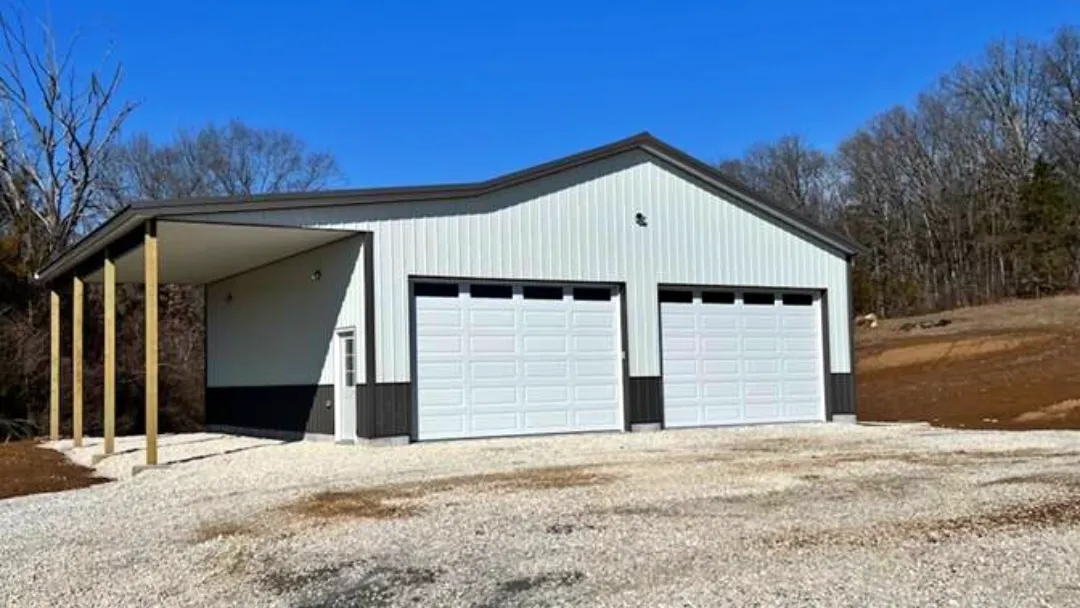
Serving Rural Franklin County: Garage, Barn, and Outbuilding Doors in Gray Summit, Catawissa, and Leslie
If you live down a gravel road in Gray Summit, Catawissa, or Leslie, you already know your property doesn’t work like a subdivision lot. You’ve probably got a detached garage, maybe a pole barn, maybe a workshop or equipment building with a door that’s seen better days. And you’ve probably had the experience of calling a garage door company only to find out they’d rather stay closer to the interstate.
We’re based in Union, and rural Franklin County is home for us. We drive these back roads every week. So this guide is about the doors town-focused companies tend to overlook: the detached garage that isn’t attached to your HVAC, the barn door that’s fighting mud and moisture, and the outbuilding opener that has to survive on rural power and spotty Wi-Fi.
Here’s what actually matters out here.
Why Rural Doors in MO Wear Differently Than Town Doors
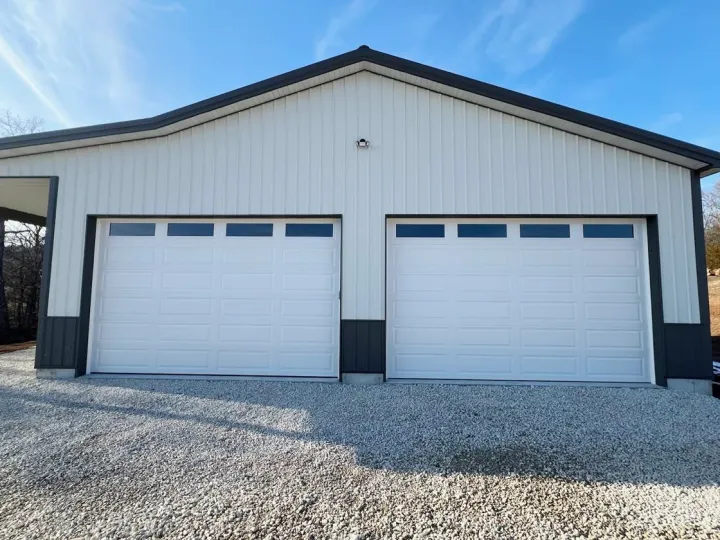
A garage door attached to a heated, insulated house lives a pretty easy life. The wall behind it is conditioned. The slab is protected. The whole structure buffers temperature swings.
A detached garage or barn door has none of that. It’s a metal-and-spring system exposed to the full Missouri weather cycle from both sides. That changes what breaks and how fast.
The freeze-thaw problem is worse on unheated buildings
Franklin County runs through real winters and humid summers, and an unconditioned outbuilding feels every degree of it. When a detached garage swings from a 15-degree morning to an afternoon thaw, the metal in your springs and hardware expands and contracts far more than it would on a heated attached garage.
Torsion springs are rated in cycles, not years, but temperature swings and moisture accelerate metal fatigue and corrosion. That’s why we see rural spring failures cluster in December thru February – the coldest stretch of the year, on the buildings with the least insulation.
Moisture and mud attack from the ground up
Most rural doors sit on a slab that meets gravel, dirt, or a driveway that turns to mud after a Missouri storm. Water splashes up. Bottom seals rot. Tracks collect grit. Rollers and hinges rust from the bottom rail upward.
On an attached garage with a clean concrete apron, you might get a decade out of a bottom seal. On a barn or outbuilding door at grade with poor drainage, we often see them fail years sooner. It’s not a defect – it’s the environment.
Critters treat outbuildings like an invitation
This is the part homeowners in town never deal with. A gap under a barn door is a highway for mice, snakes, and wasps. Damaged weather stripping on a detached workshop isn’t just a draft problem, it’s a pest problem. We factor pest exclusion into how we seal rural doors, because out here a quarter-inch gap is a real problem.
The Three Rural Door Types We Service Most
Not every “garage door” out here is a garage door. Here’s how we approach each.
Detached garages and workshops
The most common rural setup: a standalone garage or shop with a standard sectional door and an opener. The mechanics are the same as an attached garage, but the exposure is harsher and the wiring is often older or on a separate run.
What we watch for: corroded hardware, springs fatigued early by temperature swings, and openers that have taken a hit from a nearby lightning strike or a rural power surge. If your building is detached, a battery backup and a surge-protected opener aren’t a luxury – they’re how you keep working when the power blinks.
Pole barns and ag buildings
Pole barns are their own animal. The framing, header, and track mounting are different from a stick-built garage, and the openings are often wider and taller for equipment and trucks. That means heavier doors, higher-torque springs, and mounting that has to be engineered for the building, not just bolted to a standard header.
This is where a lot of general handymen get in over their heads. A wide, heavy barn door on undersized springs or improper track is a safety hazard. We size the spring system to the actual door weight and mount it to the actual structure.
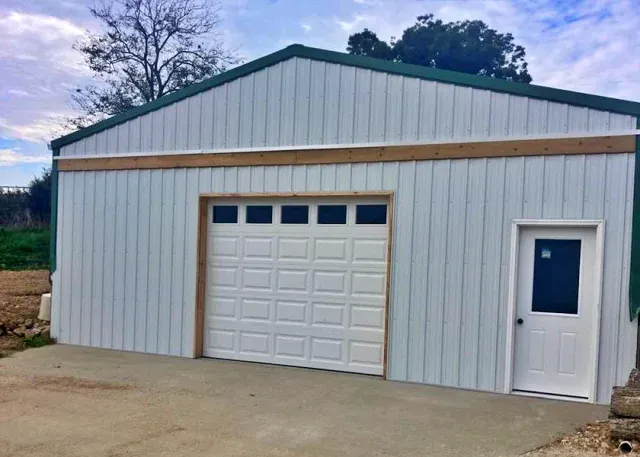
Outbuildings, sheds, and equipment storage
Smaller doors on smaller buildings, but often the most neglected. These are the doors that get ignored until they won’t budge. Common issues: seized rollers from years without lubrication, off-track doors from settling foundations, and bottom seals that rotted out long ago.
The good news is these are usually the least expensive to bring back to reliable service, especially if you catch them before a spring or cable lets go.
The Two Problems Unique to Rural Franklin County
Power and connectivity: your smart opener may not be so smart
Half the marketing on modern openers is about the app. But if your building is at the end of a long service line, or your Wi-Fi barely reaches the house let alone the barn, that connectivity is unreliable at best.
For rural buildings, we care more about the fundamentals: a strong, reliable motor, a battery backup that keeps you moving during an Ameren outage, and surge protection on the logic board. If solid Wi-Fi does reach your outbuilding, smart features are a nice bonus. If it doesn’t, we’d rather put your money into durability than a feature you can’t use. We’ll tell you straight which one your property is.
Distance means the first-visit fix matters more
When you’re 2 miles off the main road, a company that has to come back a second time for the right part is costing you a whole extra day. That’s why we stock our trucks to handle the most common detached-garage and barn-door failures on the first visit – springs, cables, rollers, seals, and common opener parts. Fewer trips is the whole point of hiring someone who actually works out here.
Rural Door Maintenance: A Franklin County Checklist
Detached and outbuilding doors need more attention than town doors, not less, precisely because they’re exposed. Twice a year – ideally before winter and after mud season – walk through this:
- Check the bottom seal for rot, gaps, and pest entry points. Replace it before it lets water and critters in.
- Look at the bottom rollers and hinges for rust and grit. These fail first on doors near gravel.
- Lubricate springs, rollers, hinges, and the opener chain or screw with a proper garage door lubricant – never WD-40, which strips lubrication and attracts dust.
- Test the auto-reverse safety feature. Even on a barn, a door that won’t reverse is a hazard.
- Confirm the door is sealing at the sides and top so heat, water, and animals stay out.
- If the building sits on a slab that’s settled, watch for tracks that are pulling out of alignment.
If your door is stiff, loud, or slow in cold weather, don’t force it. On an unheated building, cold-stiffened springs are already under extra stress, and forcing a struggling door is how a spring or cable snaps.
What to Never DIY on a Rural Door
We’re big believers in homeowners doing their own maintenance. Lubrication, seal replacement, and cleaning tracks are all fair game.
But torsion springs and cables on a heavy detached garage or barn door hold enormous stored energy, and a wide ag-building door holds even more. A spring that lets go can cause serious injury. That’s the line: if it’s under tension, call us. If it’s a seal or a squeak, have at it.
Why Local Actually Matters Out Here
A national chain or a St. Louis company routing calls from a call center doesn’t know that the door on a pole barn off Highway 100 needs different springs than a subdivision garage in town. They don’t know what Franklin County winters do to hardware, and they’d usually rather not drive out to Catawissa or Leslie for a single door.
We would. We’re in Union, we serve rural Franklin County on purpose, and the person who diagnoses your door is the person standing in your driveway – not a script.
Get Your Rural Door Handled
If you’ve got a detached garage, barn, or outbuilding door in Gray Summit, Catawissa, Leslie, or anywhere in rural Franklin County that’s overdue for attention, we’ll come take a look and give you honest, upfront pricing.
Call Union Garage Door Service at (636) 221-7066 or request a free estimate on our contact page. We’ll tell you exactly what your door needs – and just as importantly, what it doesn’t.
Questions & Answers About Rural Garage Doors
Question – Why do rural garage doors wear out faster than doors on an attached garage?
Answer – Detached garages, barns, and outbuildings are unheated and uninsulated, so they feel the full Franklin County weather cycle from both sides. The freeze-thaw swings of a Missouri winter accelerate metal fatigue and corrosion in springs and hardware, and doors sitting at grade near gravel or mud collect moisture and grit that rust rollers, hinges, and bottom seals from the ground up.”
Question – Do I need a battery backup opener for a detached garage or barn?
Answer – For rural buildings we recommend it. Detached buildings are often on long or older service runs and are more exposed to power blinks and surges. A battery backup keeps you moving during an Ameren outage, and surge protection on the opener’s logic board helps it survive nearby lightning strikes and rural power spikes.
Question – Do you service pole barn and ag building doors, or only standard garage doors?
Answer – We service both. Pole barn and ag building doors are often wider and heavier than standard garage doors, which means higher-torque springs and mounting engineered for the building’s framing and header rather than a standard garage header. We size the spring system to the actual door weight and mount it to the actual structure.
Question – How often should I maintain a detached garage or outbuilding door?
Answer – Twice a year, ideally before winter and after mud season. Check the bottom seal for rot and pest gaps, inspect the bottom rollers and hinges for rust, lubricate the springs, rollers, hinges, and opener drive with a proper garage door lubricant (never WD-40), test the auto-reverse safety feature, and confirm the door seals at the sides and top to keep out heat, water, and animals.
Question – Is it safe to replace a barn or detached garage door spring myself?
Answer – No. Torsion springs and cables on heavy detached garage and barn doors hold enormous stored energy, and wide ag-building doors hold even more. A spring that lets go can cause serious injury. Homeowner maintenance like lubrication, seal replacement, and cleaning tracks is fine, but anything under tension should be left to a professional.
Question – Do you serve Gray Summit, Catawissa, and Leslie?
Answer – Yes. We are based in Union and serve rural Franklin County on purpose, including Gray Summit, Catawissa, Leslie, and the surrounding back roads. The person who diagnoses your door is the technician standing in your driveway, not a call center, and we stock our trucks to fix the most common detached-garage and barn-door failures on the first visit.