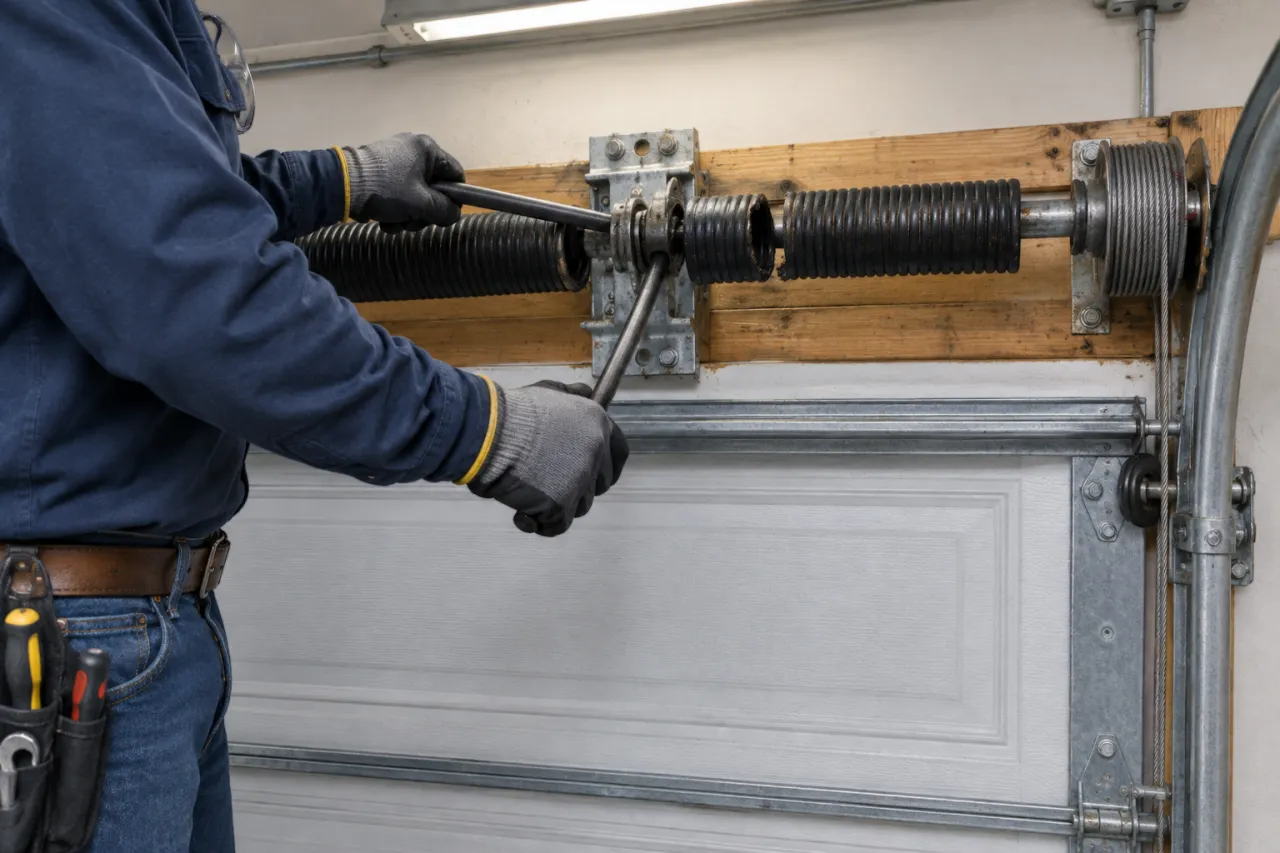
Broken Torsion Spring Repair: What Every Franklin County Homeowner Should Know
If you're reading this because your garage door stopped halfway up and you heard what sounded like a firecracker in the garage, you can skip the suspense: your torsion spring broke. It's the single most common repair call we run, and it's the one repair we'd ask you not to touch. Everything else on your door - rollers, seals, sensors, even cables in some cases - is fair game for a handy homeowner. A torsion spring is not.
Here's what actually happened, what you should do in the next ten minutes, and what a proper garage door spring repair looks like when we show up.
What a Torsion Spring Actually Does
Most people assume the garage door opener lifts the door. It doesn't. The opener is basically a traffic cop. The real lifting is done by the torsion spring - the long, tightly wound coil mounted on a shaft directly above the closed door.
When your door is down, the spring is wound tight, holding enough stored energy to lift a door that commonly weighs between 150 and 300 pounds. As the door opens, the spring unwinds and transfers that energy through cables and drums. When the door closes, it winds back up again.
That means every single open-close cycle puts your spring through a full stress cycle. Standard residential springs are rated for about 10,000 to 20,000 of those cycles. For a family coming and going four times a day, that works out to roughly 7 to 14 years of service. When the cycles are used up, the metal fatigues and the spring snaps - often at the worst possible moment, because that's how springs work.
Why Springs Break (and Why It's Usually Not Your Fault)
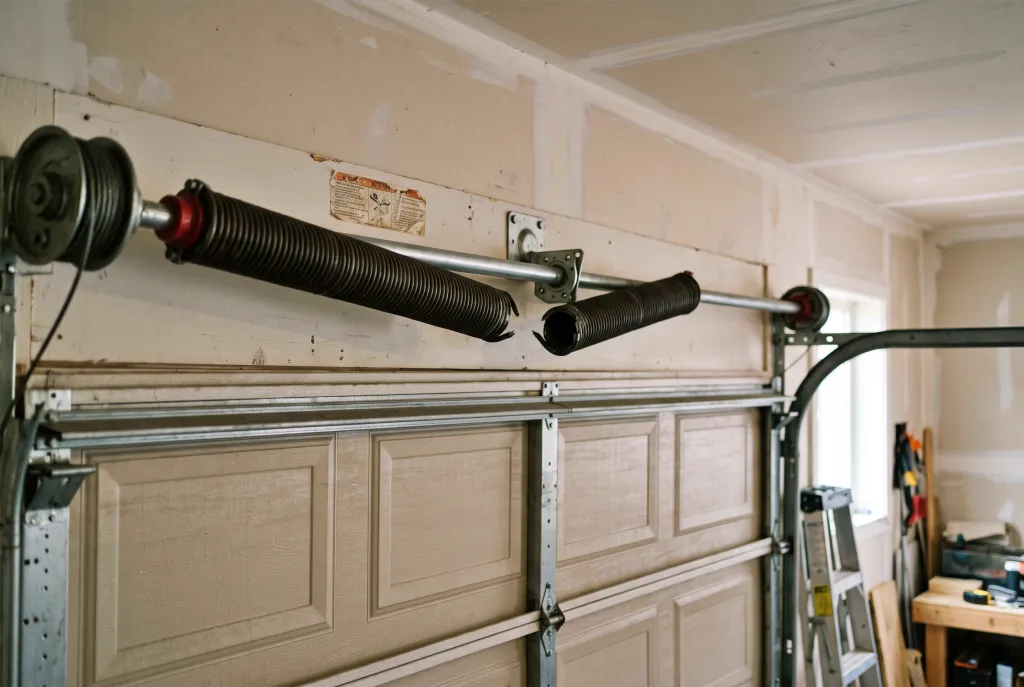
In four decades of doing this around Union, we see four common causes:
- Plain old cycle fatigue. The spring did its job and ran out of cycles. Nothing you did wrong.
- Rust on the spring. Franklin County gets humidity, freeze-thaw, and road salt tracked in all winter. Corrosion creates weak points in the coil that fail early. A spring that's never been lubricated can lose years of life.
- The wrong spring for the door. If a previous installer replaced a spring without properly matching the wire size, inside diameter, and weight of the door, it's been fighting an unfair battle since day one. We see this a lot on doors that had a cheap, one-size-fits-all repair years back.
- Increased door weight. New bottom seals, added insulation, moisture-swollen wood doors - doors gain weight, and the original spring was never rated for it.
One thing that is rarely the cause: your opener. If your door won't open and you assume the opener died, check the spring first. A broken garage door spring is the more likely culprit, and pressing the opener button with a broken spring just strains the motor and strips the gears.
The First 10 Minutes After a Garage Door Spring Breaks
If your door is stuck, crooked, or slammed down hard, do this:
- Leave the door where it is. If it's partially open, don't try to force it closed or pull it up.
- Stop using the opener. Disconnect it if you can reach the release cord safely - pull the cord only when the door is closed, never with the door in motion or stuck mid-travel.
- Keep everyone clear. A door with a broken spring can free-fall if the remaining components let go. Kids, pets, cars - all stay out from under it.
- Don't touch the spring, cables, or drums. Anything under tension stays under tension even after it breaks.
- Call for same-day repair. (636) 221-7066. We keep common spring sizes on the truck, so most repairs are done in a single visit.
Why We Won't DIY-Proof This One
We're big believers in homeowners doing their own maintenance - but we've also been the ones cleaning up after spring projects gone wrong for 40 years, so hear us out.
Winding a torsion spring means loading that same energy that lifts your 200-pound door, by hand, with winding bars, a quarter-turn at a time. If the bar slips out of the winding cone, the spring releases the full stored energy instantly. It breaks bones, causes head injuries, and has killed people. Consumer Product Safety Commission-linked data attributes an estimated 20,000 to 30,000 emergency room visits a year to garage doors, and springs and cables are among the worst offenders.
Beyond the danger, there's the physics problem. A replacement spring has to match your door's exact weight and drum setup - wire diameter, inside diameter, and wind direction. Get it wrong and your opener strains, your door slams or drifts up, and the new spring fails years early. We've replaced plenty of mismatched springs that some big-box parts aisle "looked about right."
If it's under tension, call us. If it's a squeak or a seal, have at it.
What a Proper Torsion Spring Repair Looks Like
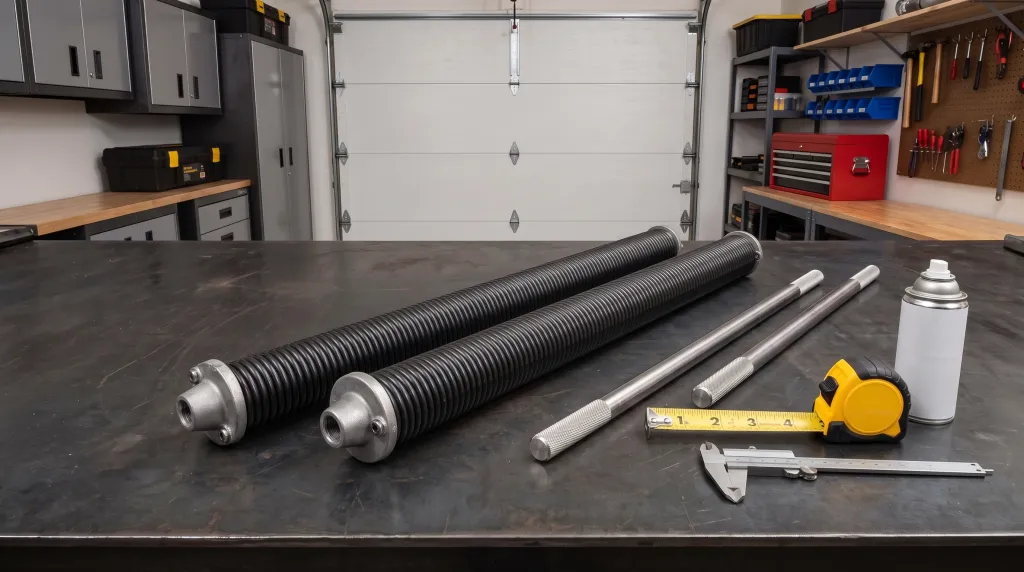
When we run a broken torsion spring repair, here's the sequence:
- Inspect the whole system first - shaft, bearings, drums, cables, and the second spring. A snapped spring often damages neighbors in the breakdown.
- Weigh and measure the door, then match the spring properly. We replace both springs even if only one broke. Your door was built with two springs working as a pair; running a new spring against a fatigued one guarantees a second service call within months.
- Wind the new springs to factory spec with calibrated winding bars, a quarter-turn at a time.
- Run a full balance test - door lifted off the opener and moved by hand, holding at every height. If it stays put, the springs are right.
- Lubricate, cycle-test the opener, and adjust the travel and force settings so the motor isn't fighting the new springs.
A correct repair takes us about an hour to ninety minutes, and most doors are back in service the same day.
How to Make Your Next Garage Door Spring Last Longer
You can't stop metal fatigue, but you can get every year you paid for:
- Lubricate the springs twice a year with a proper garage door lubricant - never WD-40, which strips the factory lubrication and attracts grit.
- Listen for the warning sounds. A squeaking, grinding, or "stick-slip" noise on the first open of the day often means a dry or fatiguing spring.
- Watch for the gap. A visible separation, about an inch of coil, in the winding near the cone means the spring has broken or is about to.
- Schedule a tune-up. Our maintenance visits include a spring cycle inspection, so you can plan the replacement on your schedule instead of at 6:45 on a Monday morning.
If your door's been loud or slow lately, or you'd rather not wait for the bang, book a tune-up and we'll tell you honestly how much life your springs have left.
Do You Have a Broken Spring Right Now?
Union Garage Door Service provides broken garage door torsion spring repair across Union, Washington, Pacific, Sullivan, St. Clair, and all of Franklin County, MO - same-day service in most cases, with the right springs on the truck. Call (636) 221-7066 or request a free estimate, and if your door won't open at all, head to our emergency garage door repair page for what to expect from a same-day call.

Jay Mangelsdorf is the owner of Union Garage Door Service, a family-owned garage door company based in Union, Missouri, serving Franklin County and the St. Louis west county area since 1978. For more than four decades, Jay has personally diagnosed and repaired thousands of doors – torsion springs, cables, openers, off-track doors – handling every job himself rather than passing it to a rotating crew of subcontractors. He’s known for honest, upfront pricing: a clear diagnosis and a firm quote before any work begins. When he’s not up on a ladder, Jay enjoys time with his family and staying active in the Franklin County community.

0 Comments